





Areca palm leaf tableware: what it is and where it fits
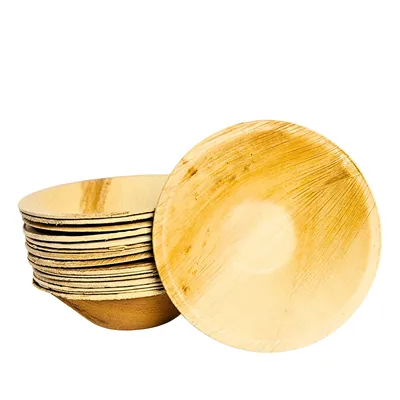
Plates, bowls and trays pressed from the leaf sheaths the areca palm sheds on its own. Nothing is added to the leaf, and no tree is cut to make it.

What is it?
The areca palm drops its old leaf sheaths naturally as new growth comes through. On many farms those sheaths were swept up and burned. Ours are collected from farmer partners in Karnataka, Kerala and Assam and paid for, so the farm earns an income from a residue it used to burn.
How is it manufactured?
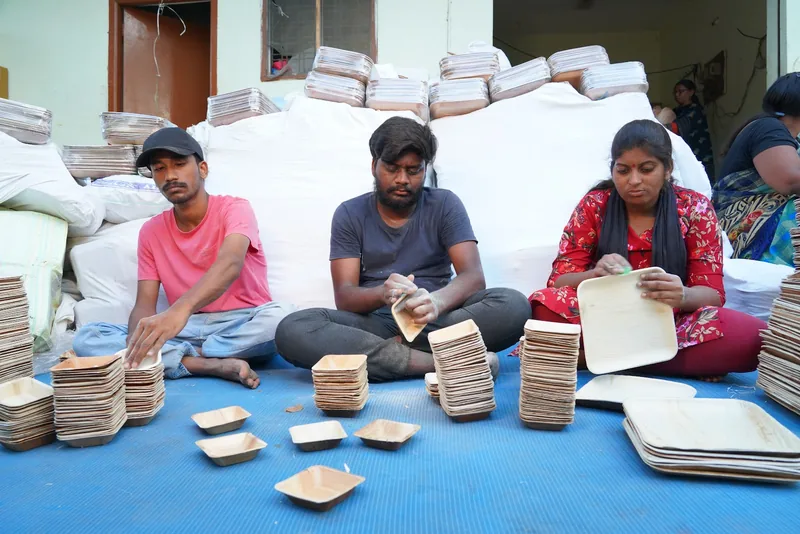
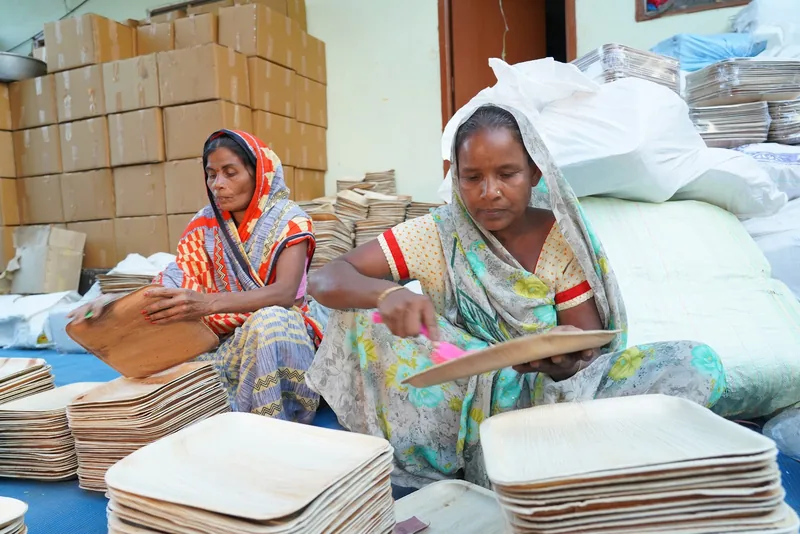
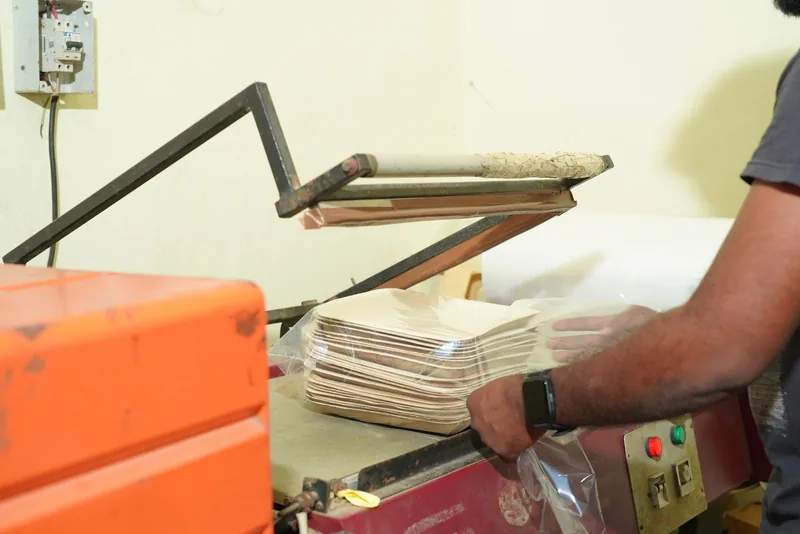
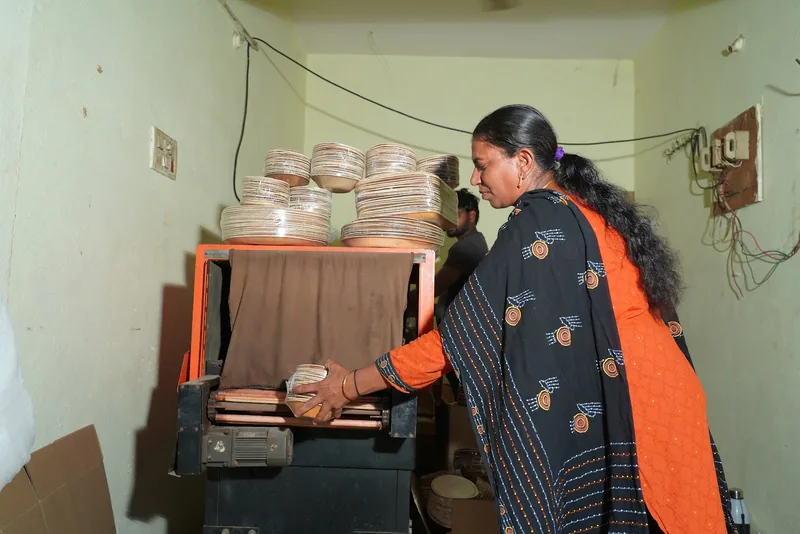
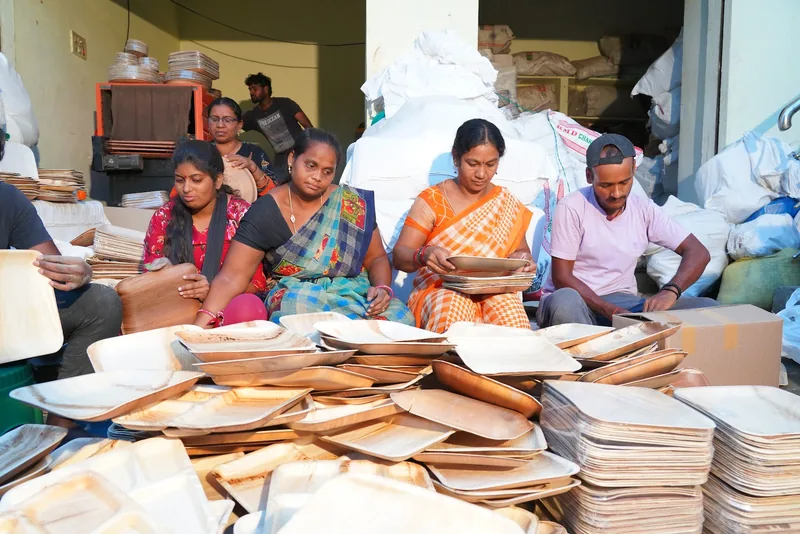
Sheaths are cleaned in a multi-stage water and pressure line, then pressed in heated dies. Heat and pressure together shape the sheath and set it in the form of the die, which is how a leaf becomes a plate, bowl or tray without any binder. Pressed pieces are UV treated, trimmed, graded and packed. No coating, dye, wax, bleach or binder is used at any stage. The group’s areca units are at Hubli (since 2014) and Bengaluru (since 2016) in Karnataka, close to the raw material.
Applications
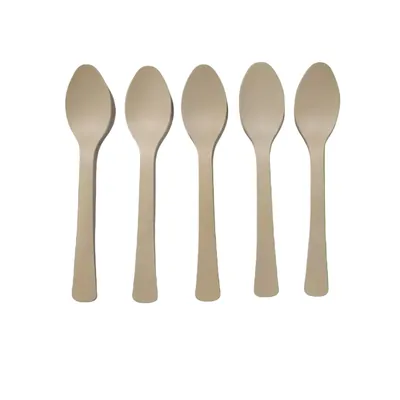
Round and square plates, bowls, compartment plates, rectangular and compartment trays, and spoons, forks and knives. Smaller plates and bowls suit snacks and desserts; larger plates and compartment plates suit full meals, buffets and catering.
Performance
A rigid, single-fibre piece that holds hot, wet and oily food and keeps its shape under a full portion: it will not fold under a loaded curry. Heating limits (microwave and oven) are confirmed per product on the specification sheet rather than given here as a general claim.
Sustainability profile
An agricultural residue with no purpose-grown crop behind it, so no irrigation, fertiliser or land use is attributable to the product itself. Collection gives farming families paid work and a second income from palms they already grow.
End of life
Home compostable, approximately 60 to 90 days in a garden bin with reasonable moisture, as set out in our composting guide. It goes in with food residue still on it. Like every compostable product, it does not break down in landfill.
Certifications and standards
BPI and ASTM D8410 where held, as listed on the Quality and compliance page. Scope is confirmed per product, and certificate copies are available on request.
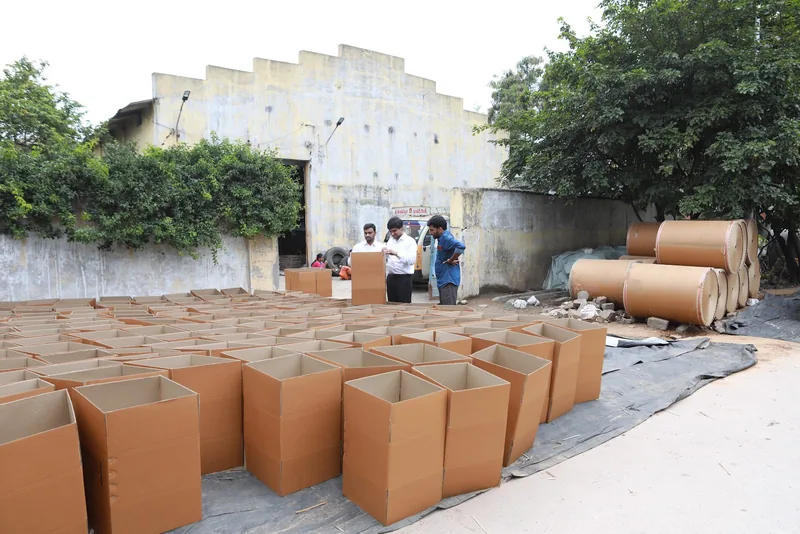
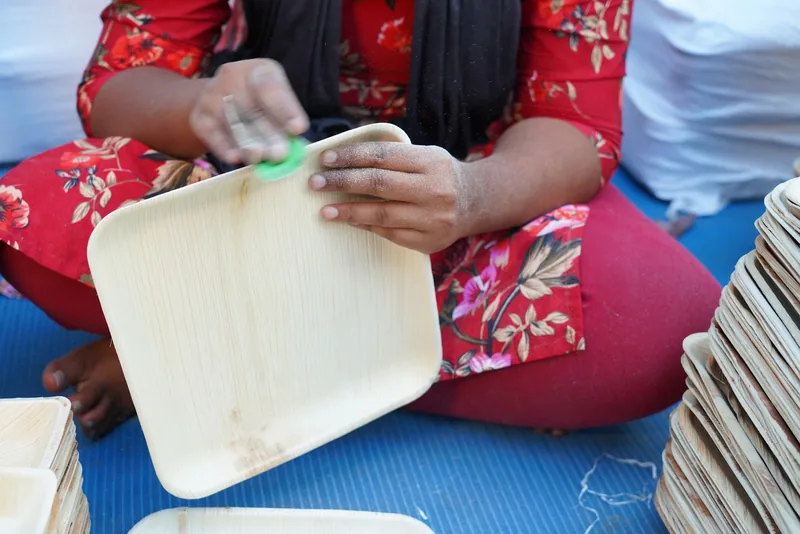
Finishing and packing, photographed
Suitability
Hot and heavy dishes, curries and oily food, buffet and catering presentation, and retail packs where a natural look helps the sale.
Limitations
Colour and grain vary from sheath to sheath. Grading narrows the variation, so agree a grade at order if a uniform look matters. The leaf surface cannot be printed: branding goes on cartons, sleeves and labels. Supply follows the season, and humid storage can cause mould, so keep cartons dry.
Bollant products in this material
Areca palm leaf runs through three ranges: Plates and bowls, Trays and clamshells and Cutlery (spoons, forks and knives). Each product page lists the case specification; request the SKU workbook for per-item figures.
Questions, answered
Common questions on this material are covered in the FAQ, and the composting guide sets out end-of-life routes material by material.