




Disposable glove materials: what each is and where it fits
Disposable gloves for food handling, prep and cleaning. A barrier product with no compostable claim.

What is it?
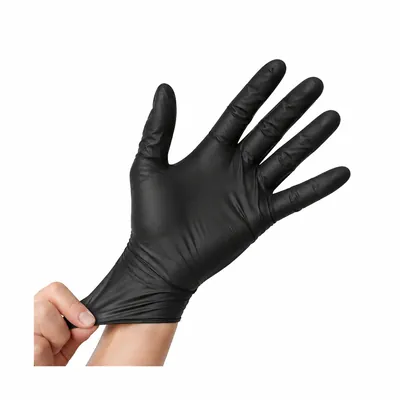
Nitrile (synthetic rubber), vinyl (PVC) and natural rubber latex, each with a different balance of strength, fit and cost.
How is it manufactured?
Hand-shaped formers are cleaned, dipped in coagulant and then in the glove material, leached, cured and stripped. Samples from each batch are tested for pinholes before the gloves are boxed. Poly (PE) gloves are different: film is heat-sealed and cut to shape.
Applications
Nitrile, vinyl and latex disposable gloves in sizes S to XL, powder-free and boxed by size in dispenser cartons. Poly (PE) gloves are available to order.
Performance
Nitrile gives the highest durability for sustained prep and cleaning. Vinyl is the economical choice for short tasks with frequent changes. Choose by task and thickness rather than buying one glove for everything.
Sustainability profile
None. Food safety sometimes requires a barrier no natural material currently provides.
End of life
General waste: no compostable or recyclable route.
Certifications and standards
Food-contact compliant. Documentation on request.
Suitability
Food preparation and handling, cleaning, washroom and general hygiene.
Limitations
Some kitchens and buyers avoid natural rubber latex altogether; nitrile and vinyl cover that requirement. Supplied because the requirement is real, and described honestly rather than dressed up.
Bollant products in this material
Gloves sit in the Gloves and kitchen wear range, with hairnets and kitchen wear. Each product page lists the case specification; request the SKU workbook for per-item figures.
Questions, answered
Common questions on this material are covered in the FAQ, and the composting guide sets out end-of-life routes material by material.